How to track client progress beyond the scale
The numbers that show a personal training client is getting better when the scale does not move: strength, consistency, measurements and how they feel.

Coach at Omnia Personal Training and co-founder of Trainnode · 4 min read
Clients quit when they think nothing is happening. Usually plenty is happening, it's just not on the scale. A client who adds 20 kg to their squat in three months and sleeps better has made real progress, even if their weight is the same. Your job is to measure the progress that is there and to show it.
Why the scale alone misleads
Body weight moves with water, salt, sleep and the menstrual cycle, by one or two kilos from day to day. A client who starts strength training often gains some muscle while losing fat, so the scale barely moves while their body changes. If weight is the only number you show, you are showing the noisiest one.
Keep the scale if the goal is weight loss. Read it as a weekly average, and never as the only measure.
The four kinds of progress worth tracking
1. Strength
Strength is the most reliable sign that training works, and it's the one clients feel. Pick three or four main lifts per client and follow them over time:
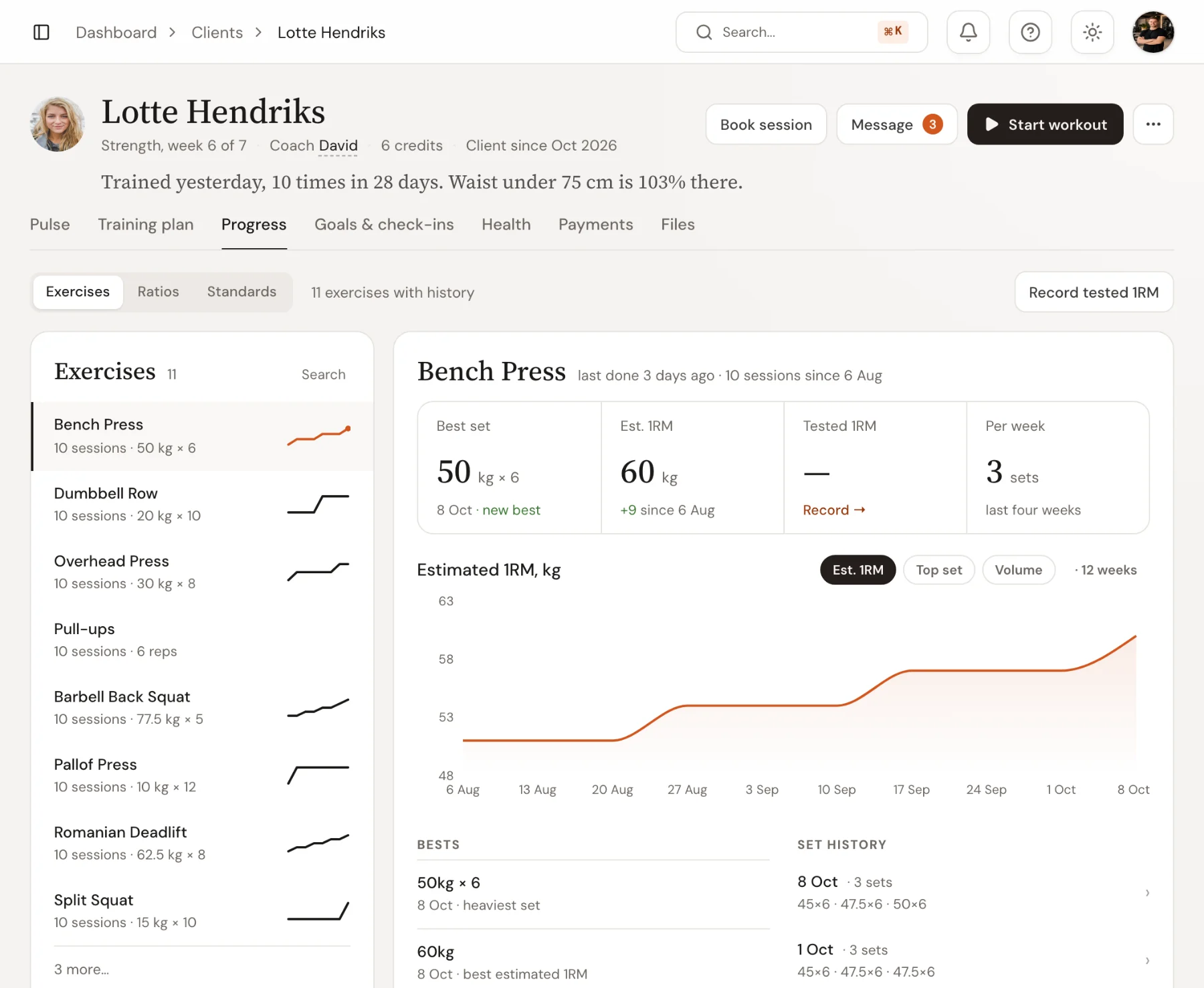
- Estimated one-rep max (e1RM). Calculated from any heavy set, so you don't have to test a true max. A set of 5 at 80 kg is an e1RM of about 90 kg.
- Best set at a given rep count. "Five reps at 82.5 kg, up from 70 kg in August" is a sentence clients understand.
- Personal records. Celebrate them when they happen, not three weeks later.
Our 1RM calculator shows how e1RM is calculated from reps and weight.
2. Consistency
The most underrated number in personal training: sessions trained versus sessions planned. A client who trains 22 of 24 planned sessions will make progress almost regardless of the program. A client who trains 12 of 24 will not, however good the program is.
Show it as a simple count over the last eight weeks. It turns "I'm not getting anywhere" into "you trained half the sessions, let's fix that first".
3. Body measurements
Waist, hips and thighs, measured every two to four weeks at the same time of day. Waist is the most useful single measurement for most goals. Progress photos front, side and back every four weeks, with the same light and clothes, show what numbers miss.
4. How they feel
Energy, sleep and pain, from a weekly check-in. These often improve first, weeks before strength or measurements move, and they are what clients notice in daily life.
How often to measure
Measuring too often shows noise. Measuring too rarely means you miss a problem until it's months old.
| What | How often | Notes |
|---|---|---|
| Strength on main lifts | Every session | Comes from the training log, no extra work |
| Sessions trained | Weekly | Count against what was planned |
| Body weight | Daily or weekly | Look at the weekly average, never one day |
| Waist and other measurements | Every 2 to 4 weeks | Same time of day, same tape |
| Progress photos | Every 4 weeks | Same light, place and clothes |
| Check-in | Weekly | Energy, sleep, pain |
Put the measurement days in the calendar. If the client knows that photos and measurements happen in the first session of every month, it stops feeling like an exam.
Show the progress, not just the data
Collecting numbers is half the work. The other half is a short review every four to six weeks:
- Pick three numbers that moved. Not twenty.
- Compare with the start, not last week.
- Name what caused it. "You trained twice a week for six weeks straight" teaches the client what works.
- Agree on the next target, based on the trend.
In Trainnode
Every lift, measurement and check-in on one client page
Trainnode builds the progress view from what clients log, so there's nothing to enter twice.
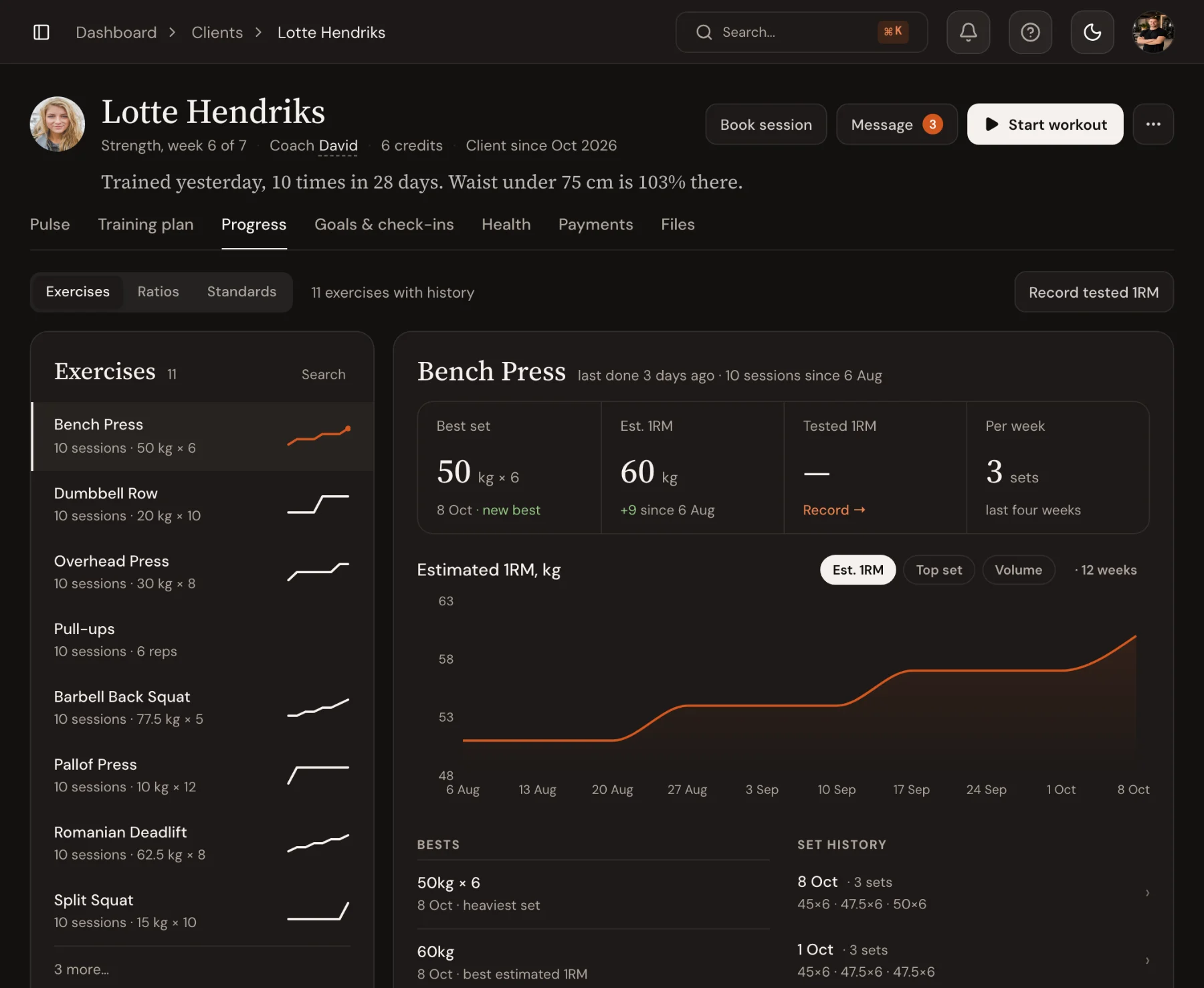
- Every set a client logs in the app, or you log during a live session, feeds the Progress tab: estimated 1RM, best sets, set history and records per exercise.
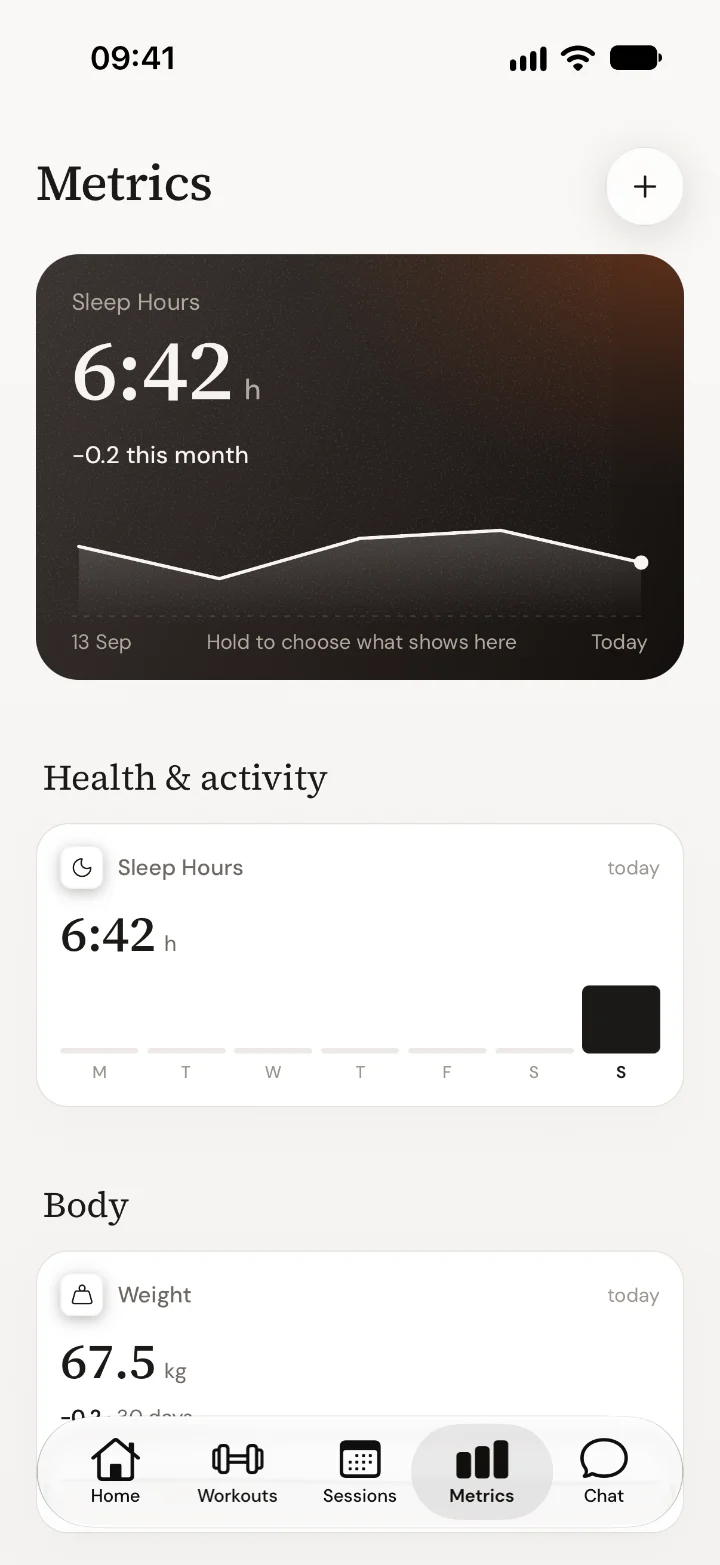
- Body weight, measurements and sleep come from the client's Metrics, entered in the app or synced from Apple Health.
- Check-in answers and progress photos sit on the same client page, so a review takes minutes.
Questions
How often should I test a true one-rep max?
Rarely, if ever, for general PT clients. Estimated maxes from regular training sets show the trend without the risk of a max attempt.
What if a client is not progressing at all?
Check consistency first, then sleep and stress from their check-ins, then the program. In that order.
Should I track body fat percentage?
Only with a method you can repeat exactly. Scales with body fat readings vary too much from day to day to be useful.