Check-in questions for personal training clients
The weekly check-in questions that tell a coach what they need to know before the next session, how often to send them, and what to do with the answers.

Coach at Omnia Personal Training and co-founder of Trainnode · 4 min read
A check-in is the part of coaching that happens between sessions. You see a client for one or two hours a week. The other 166 hours decide whether they recover, sleep, eat and show up ready to train. A short weekly check-in tells you which client to push and which one to hold back, before they walk in the door.
What makes a good check-in
Three rules separate check-ins clients fill in from check-ins they ignore.
- Under a minute. Five questions, mostly taps. Every extra open question costs you replies.
- Same questions every week. Answers only become useful when you can compare them to last week.
- Someone reads it. If a client mentions knee pain and the next session includes heavy lunges, they will not fill it in again.
The five questions
These five take about 40 seconds to answer.
| Question | Answer type | Why it is there |
|---|---|---|
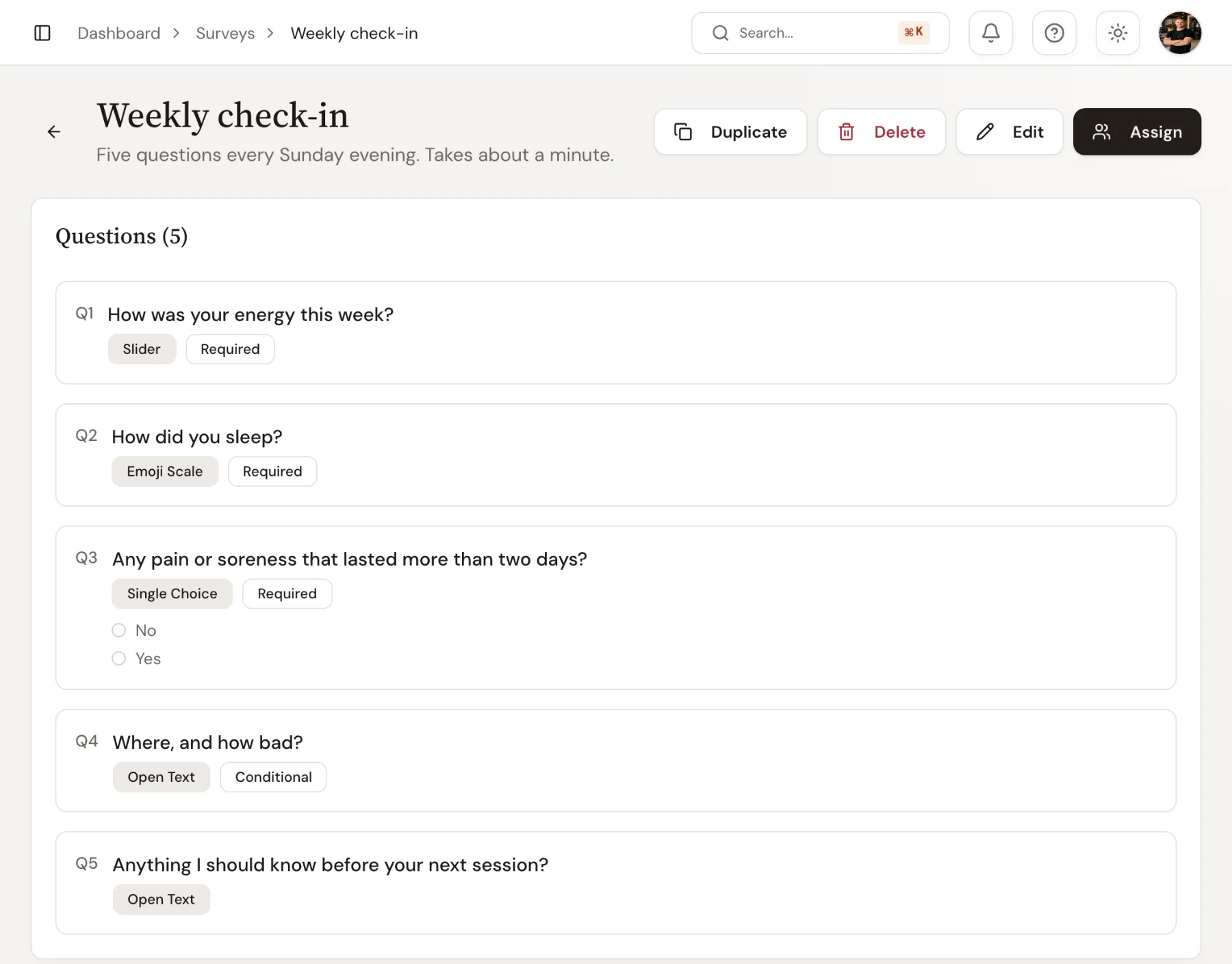
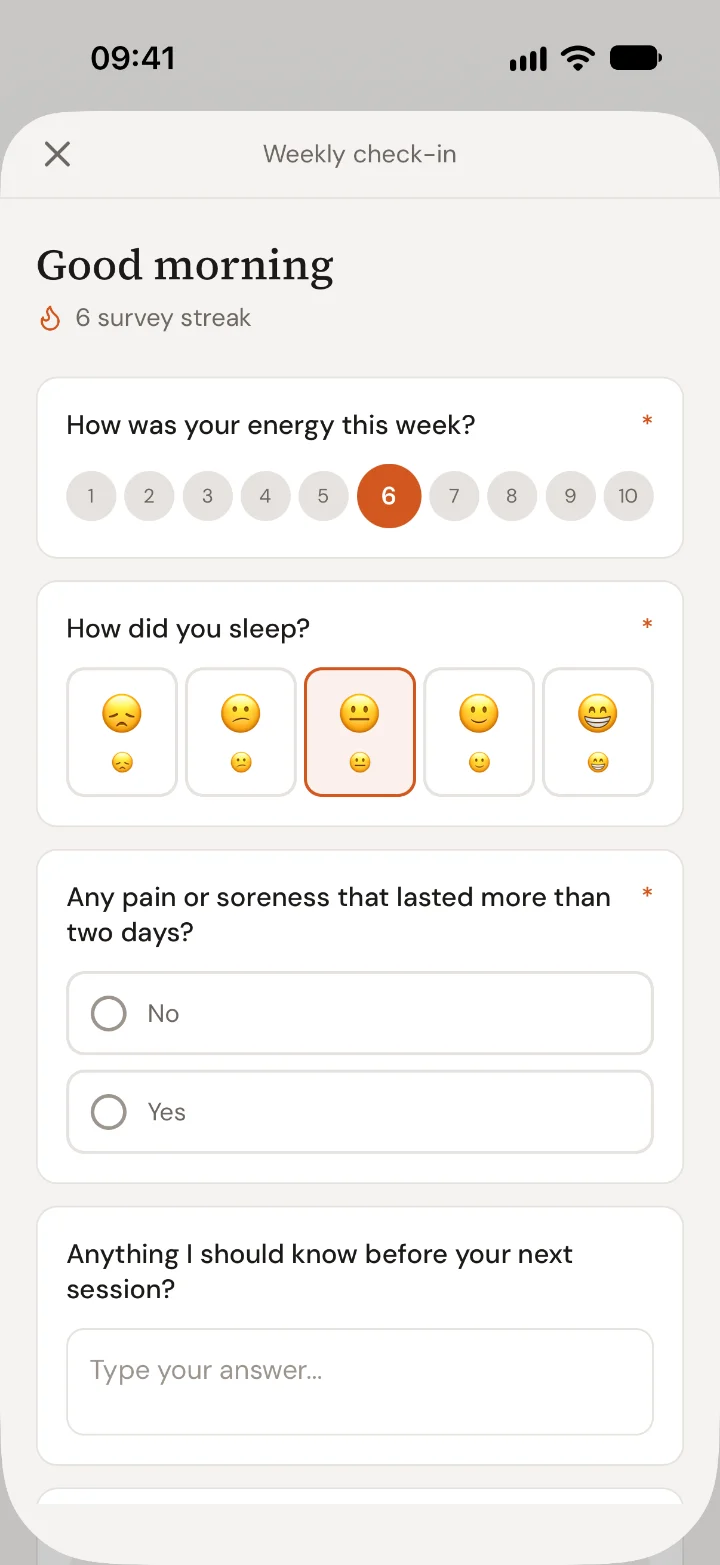
| How was your energy this week? | Slider, 1 to 10 | The quickest read on recovery and life outside the gym |
| How did you sleep? | Five faces | Sleep explains more bad sessions than programming does |
| Any pain or soreness that lasted more than two days? | Yes or no | Separates normal soreness from something to look at |
| Where, and how bad? | Open text, only after a yes | Details only when there is something to say |
| Anything I should know before your next session? | Open text, optional | Work stress, travel, a wedding, a new job |
Why "more than two days"
"Are you sore?" gets a yes from almost everyone who trains properly. Asking about soreness that lasted more than two days filters out normal training soreness and leaves the things a coach should actually adjust for.
Why the last question is optional
Most weeks there is nothing to add, and a required open question gets answered with "no" or "-". Optional means that when clients do write something, it matters.
Questions to leave out
- "Rate your nutrition this week." Clients answer with how guilty they feel, not what they ate.
- "How motivated are you?" Hard to answer honestly and hard to act on.
- Body weight, every week. Useful for some goals, stressful for others. Track it separately where it helps.
- Anything you won't act on. If an answer would not change what you do, don't ask.
When to send it
Sunday evening works for most PT clients: the week is fresh, and the answers are there before Monday's sessions. Send a reminder at the same time every week so it becomes routine.
For clients who train irregularly, an after-workout check-in can work better: two or three questions that arrive after each session, while it is still fresh.
What clients get out of it
Clients don't fill in a check-in for you. They fill it in because it changes their sessions. Tell them that at the start: "If you sleep badly or something hurts, I'll adjust the session. That's what this is for." Then show it. The first time a client sees the plan change because of their answer, the check-in stops being homework.
Over time, the answers also become their own record. A client who sees eight weeks of better sleep next to a heavier squat understands why the training works.
What to do with the answers
Reading check-ins is where the time goes, so make it routine:
- Read them before the session, not during. Monday morning, ten minutes with a coffee.
- Look for changes, not single answers. One bad night of sleep is noise. Energy dropping three weeks in a row is a conversation.
- Answer the open question. Even a one-line reply ("Thanks, we'll go lighter on the squats") tells the client it was worth filling in.
- Adjust the session. A client reporting poor sleep and low energy gets a lighter day. That is what the check-in is for.
In Trainnode
Send the check-in automatically and see the answers on the client
Check-ins in Trainnode are surveys you build once and send on a schedule.
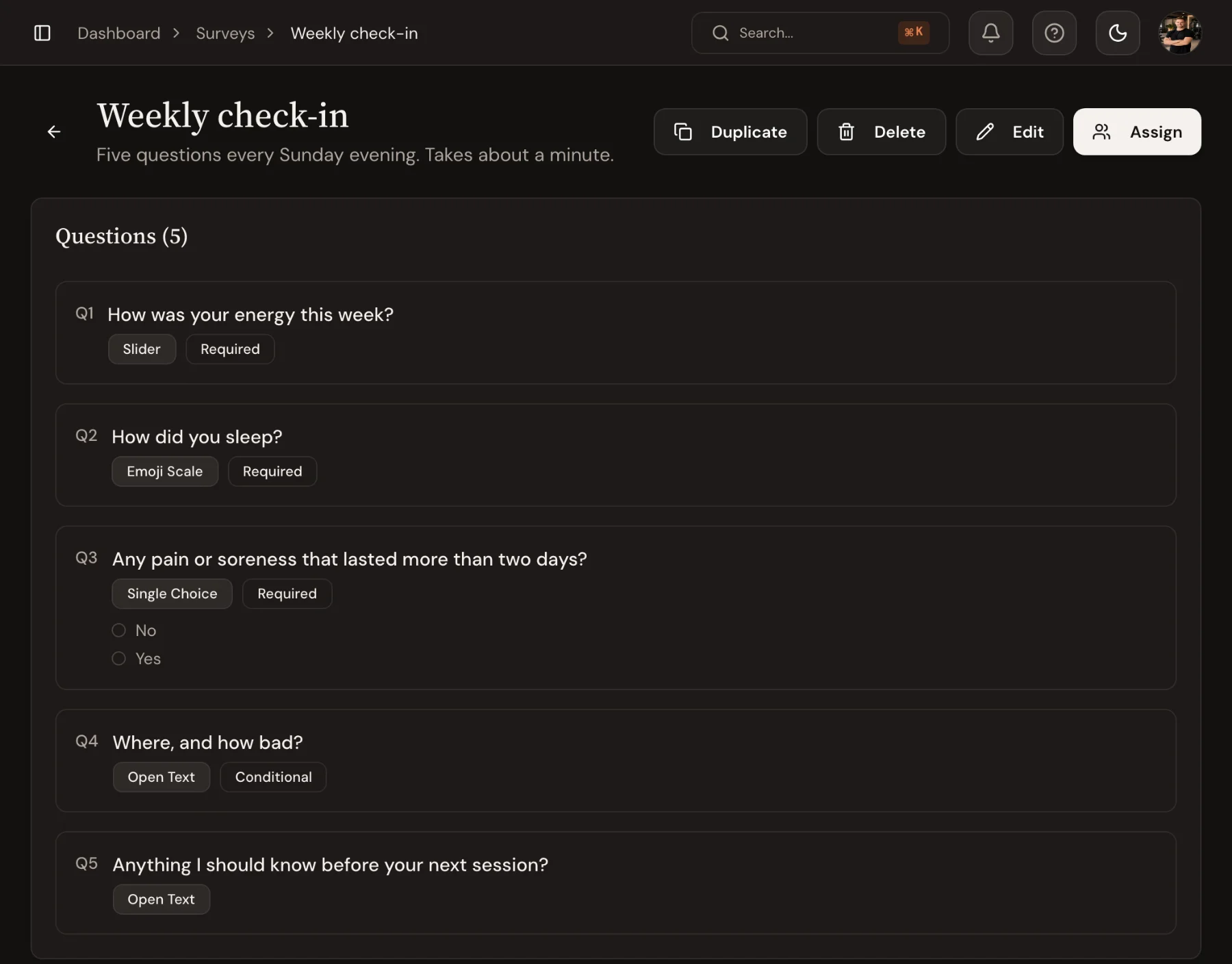
- Under Surveys, create the check-in with sliders, emoji scales, choices and open questions. A follow-up question can appear only after a specific answer.
- Assign it to clients as a weekly recurring survey with a reminder time, or after a workout.
- Clients answer in the app. You see each answer on the client's page, and trends over the weeks.
Turn on Auto-assign to new clients, and every new client gets the check-in from their first week.
Want the questions as a list to copy? They are on the weekly check-in template page.
Questions
How often should PT clients fill in a check-in?
Once a week is enough for clients who train with you two or three times a week. Daily check-ins are for athletes in a competition phase; for everyone else they become a chore.
What if a client stops filling it in?
Ask them in person. Usually it is too long or nobody replied. Shorten it before you remind them.
Should the check-in be scored?
Only if you use the score. A total of the energy, sleep and soreness answers can help you scan a list of clients quickly.