How to coach nutrition without writing meal plans
Two targets, a food log the client keeps, and one change a week. How personal trainers coach eating without meal plans, and what to read in a client’s week.

Coach at Omnia Personal Training and co-founder of Trainnode · 5 min read
Most clients who hire a personal trainer to lose fat already know what a vegetable is. What they don't have is someone who looks at their week and says: this is the bit that's holding you back. A written meal plan skips that part. It gets followed for a week, then a birthday or a late shift gets in the way, and it quietly goes in a drawer, along with the client's belief that the plan works.
Coaching nutrition well is mostly the same skill as coaching training: set a clear target, watch what happens, adjust one variable. Here is how that looks for food.
Set two numbers, not a menu
Calories decide which way the scale moves. Protein decides how much of what they lose is fat rather than muscle, and how well they recover from your sessions. Everything else is preference, and preference is what makes people stick to something.
So start with two targets:
- Calories, from their weight, activity and goal. Any standard formula gets you close; the first two weeks of logging tell you how close.
- Protein, per kilo of body weight. For most clients who train with you twice a week or more, that is the number they are furthest from.
Set both per type of day. A training day can carry more food than a rest day, and clients find that fair: they eat more on the days they work harder. Carbs and fat can have targets too, but don't coach them until calories and protein are steady.
Make logging cheap
The log is only useful if it still exists in week six. Most food diaries stop within a fortnight, and almost never because the client stopped caring. They stop because logging takes longer than eating. Three things keep it alive:
- Ask for five logged days a week, not seven. A missed Sunday is not a failure, and a client who is allowed to miss one day is less likely to give up after missing two.
- Make the repeat meal one tap. Most people eat the same breakfast and lunch on every weekday. If logging yesterday's breakfast again takes three seconds, the habit survives the busy days.
- Count pieces, not grams. "Two slices" is something a client will log on a Tuesday. "70 grams" isn't, and nobody brings scales to the office.
Tell clients what the log is for: so you can help them, not so you can check up on them. That one sentence changes how honest the log is.
Read the week, not the day
One big dinner means nothing. The same gap on four days out of five means everything. When you sit down with a client's week, look for three things:
- Protein by meal. Most shortfalls happen at breakfast and lunch, with dinner trying to make up for it. "Breakfast brings about 15 g" is a far easier fix than "eat more protein".
- Unlogged days. If the weekend is always missing, that's usually where the calories are. Ask about it kindly; don't assume.
- Days logged afterwards. A whole day entered at 22:00 is a guess from memory. It still counts, but read it as an estimate, and expect it to be on the low side.
Compare the week with their weight trend and how they trained. A client who is under on calories but flat on the scale is often logging the good days and forgetting the rest. A client who is on plan and losing steadily needs nothing from you but a "nice week".
One comment, one change
Pick the single finding that matters most and write it down for the client, with something to try. Put it on the day it happened, so they can see what you mean:
Breakfast is where the protein goes missing. Try the overnight oats from the studio recipes, they add about 25 g.
A recipe beats advice. "Eat more protein at breakfast" is homework; a recipe they can log in one tap is a decision already made. Next week, check whether the change stuck before you add anything else. Two changes at once and you won't know which one worked, and neither will they.
When the log goes quiet
A client who stops logging rarely forgot. More often the week went badly and they would rather not show it. That's the moment for a short, kind message, not a reminder:
Haven't seen your food since Thursday. Rough week? Let's just pick it up on Monday.
Clients who feel watched stop logging. Clients who feel noticed keep going. A quiet food log is also worth putting next to the other signs: missed sessions, slower replies to check-ins. Together they often show a client drifting weeks before they cancel. See Why personal training clients quit.
In Trainnode
Read a client’s food week
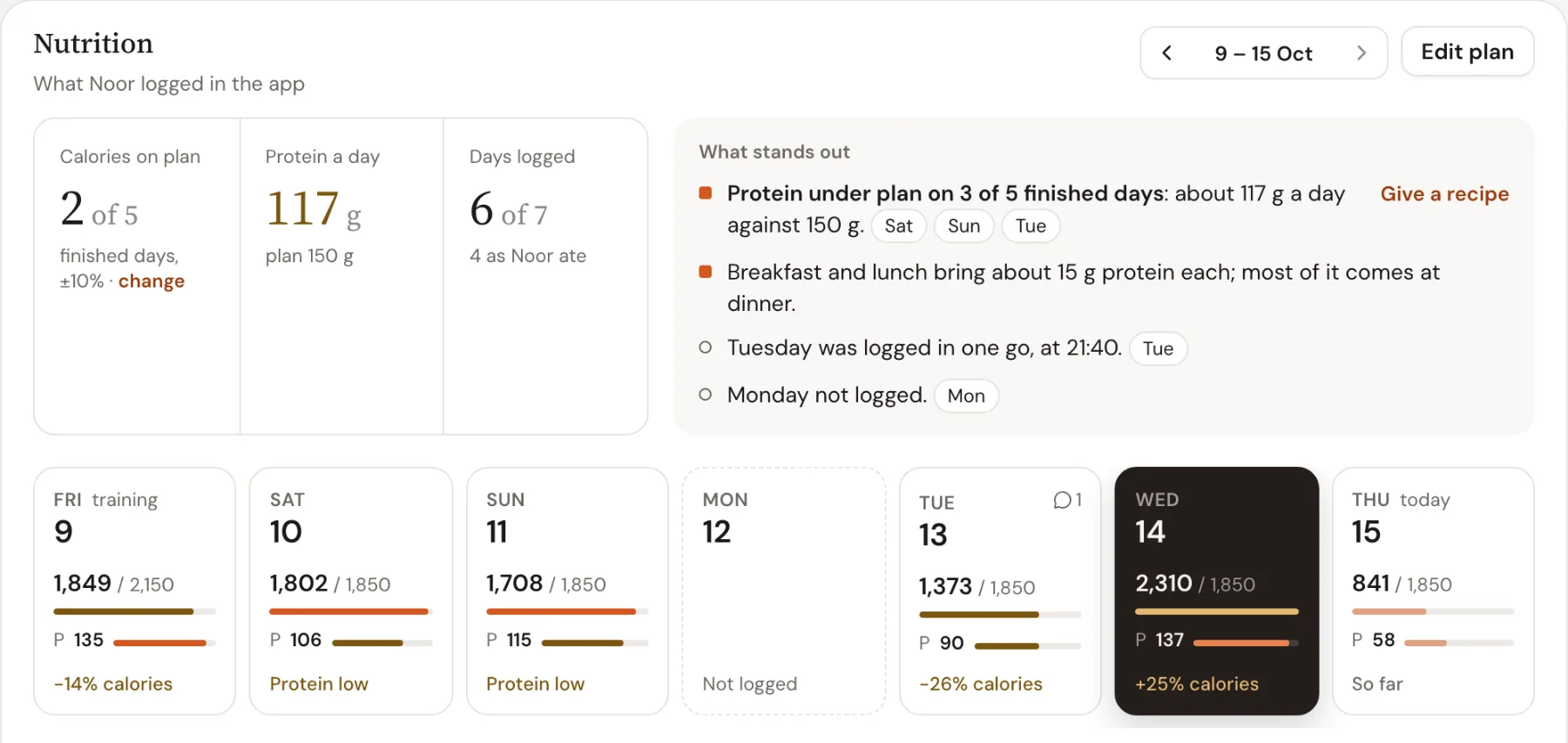
Clients log food in your studio's app, by barcode, by name or from a photo of the label. On their Health tab you see the week:
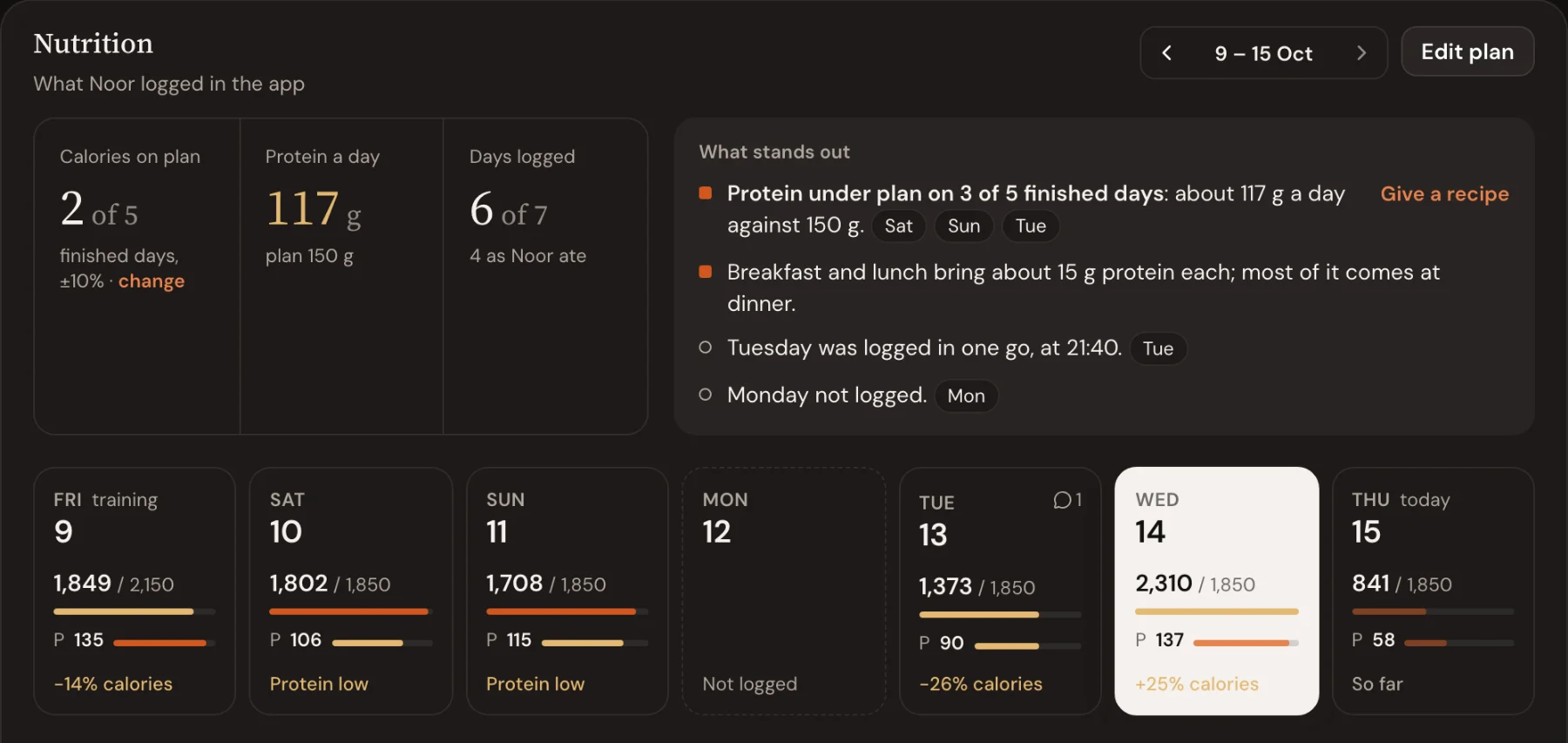
- Calories on plan, Protein a day and Days logged, against the targets you set per type of day.
- What stands out points out the patterns: protein under plan, meals that bring little protein, days not logged or logged in one go afterwards.
- Open a day to write a comment the client sees on that day, or choose Give a recipe from a protein gap.
Questions
Shouldn't a personal trainer give clients a meal plan?
You can, but most clients follow one for a week or two. Targets plus a few recipes leave the choices with them, which is what lasts. Where a client needs a medical diet, refer them to a dietitian.
How much protein should my clients eat?
It depends on the client, their goal and their training. Pick a number per kilo of body weight that suits them, set it as their target, and adjust after a few weeks of logging.
Do clients need to weigh their food?
No. Counting pieces and portions is accurate enough to coach from, and clients keep doing it. Weighing for a week can help calibrate, then let it go.
How often should I comment on a client's food?
Once a week is plenty: one finding, one change. Daily comments make a client feel watched.