How to get PT clients to keep a food diary past week two
Why clients stop logging food after a couple of weeks, and what keeps a food diary going: fewer days, repeat meals, a coach who replies and no red numbers.

Coach at Omnia Personal Training and co-founder of Trainnode · 4 min read
Almost every client starts a food diary with good intentions. By week two, half the days are empty. By week four, the diary is gone, and so is the coach's view of everything that happens outside the gym.
That isn't laziness. A food diary asks for effort three times a day and, for most clients, gives nothing back. Fix both sides of that trade and most clients keep going.
Why food diaries stop
Three reasons come up again and again:
- It takes too long. Searching for every food, guessing grams, finding the right brand. Five minutes a meal is fifteen minutes a day, which is more than most people will give.
- Nobody answers. The client logs carefully for ten days and hears nothing. The obvious conclusion is that it doesn't matter.
- It feels like being graded. Red numbers, warnings, a coach who only mentions the pizza. After a bad day, not logging is easier than being judged.
Ask for five days, not seven
Perfect weeks are rare, and a rule that every day counts turns one missed day into a broken streak. Ask for five logged days a week and say so out loud. Clients who are allowed to skip the odd Saturday don't give up after one.
Five honest days tell you more than seven invented ones.
Make the repeat meal one tap
Most people eat the same breakfast and lunch on most weekdays. Logging those again should take seconds, not a new search. Recent foods, favourites and recipes all help, and so does counting in pieces ("two slices", "one banana") instead of weighing everything.
In the first week, sit down with each client for five minutes and save their usual breakfast as a recipe. That one change takes most of the effort out of the mornings.
Reply within a week
The fastest way to keep a client logging is to show them it was read. Once a week, pick one thing from their log and write it down for them: something that went well, or one small change to try. Put it on the day it happened, so they can see what you mean.
Keep it to one point. A list of five corrections feels like a school report; one comment feels like coaching.
Show them what the log changed
Logging feels pointless until it leads somewhere. Every few weeks, put the food next to something the client cares about: the protein that went up and the squat that followed, the weekends that got logged and the weight that started moving again. Say it in a sentence, in the session: "Since breakfast changed, you've added five kilos to your squat."
That turns the diary from a chore you asked for into a tool they are using for themselves. Clients who can see what their logging did for them rarely need reminding. And when progress stalls later, they'll open the log with you instead of hiding it.
Diaries filled in afterwards still count
Some clients log the whole day at 22:00, from memory. That's less accurate, but it's far better than nothing, and it's a habit you can build on. Don't punish it. If you notice it every day, ask whether logging straight after a meal would help, and leave it there.
Never make the number the enemy
Going over a target is information, not a failure. The coach decides what it means: a birthday, a heavy training day, or a pattern worth talking about. Keep your own words as calm as the numbers should be. Clients who feel noticed keep logging; clients who feel watched stop.
When a client stops anyway
A diary that goes quiet is worth a message, not a reminder. "Haven't seen your food since Thursday. Busy week?" opens a conversation. A quiet food log, next to a missed session or a slower check-in reply, is often one of the first signs a client is drifting.
In Trainnode
Keep the food log easy in Trainnode
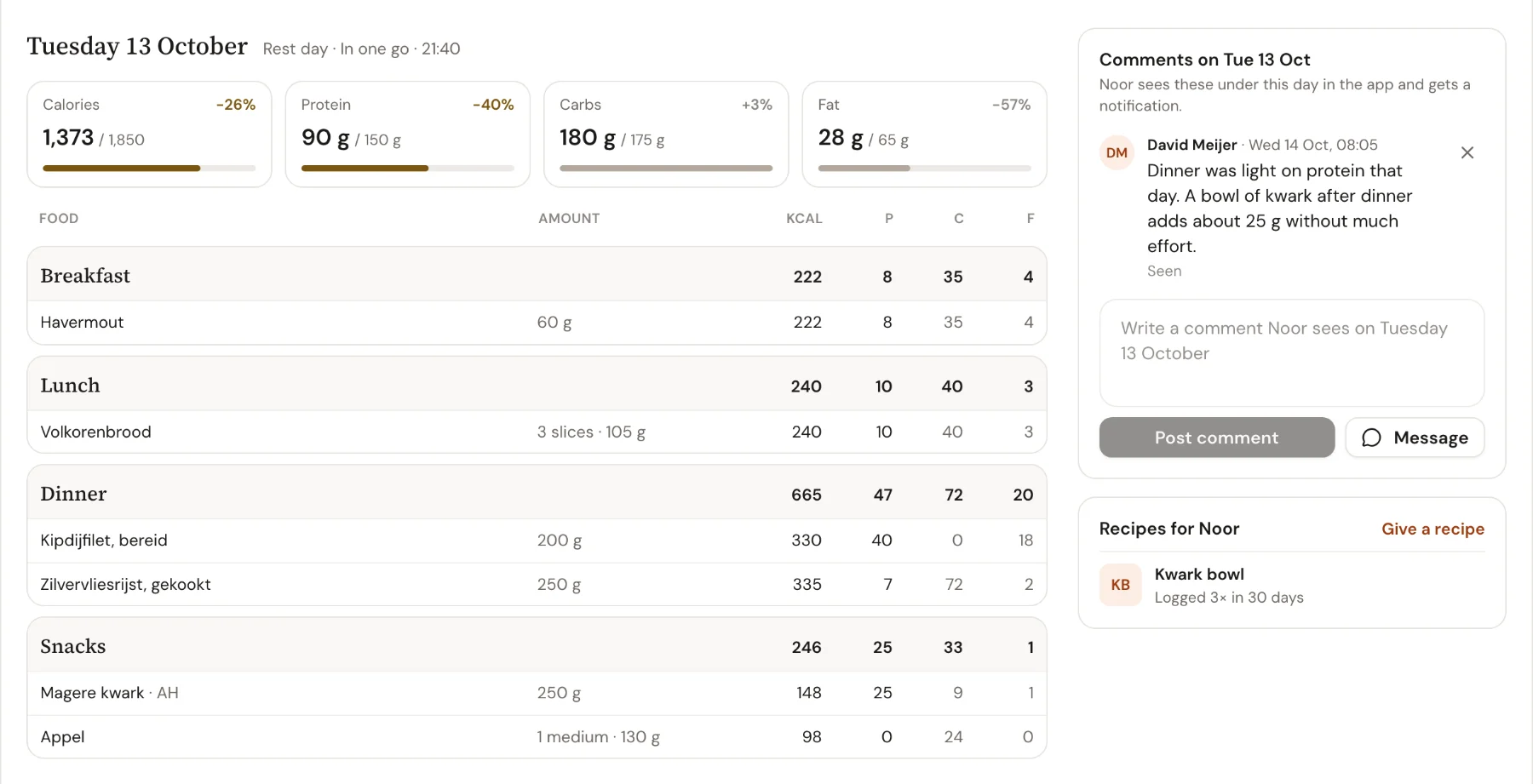
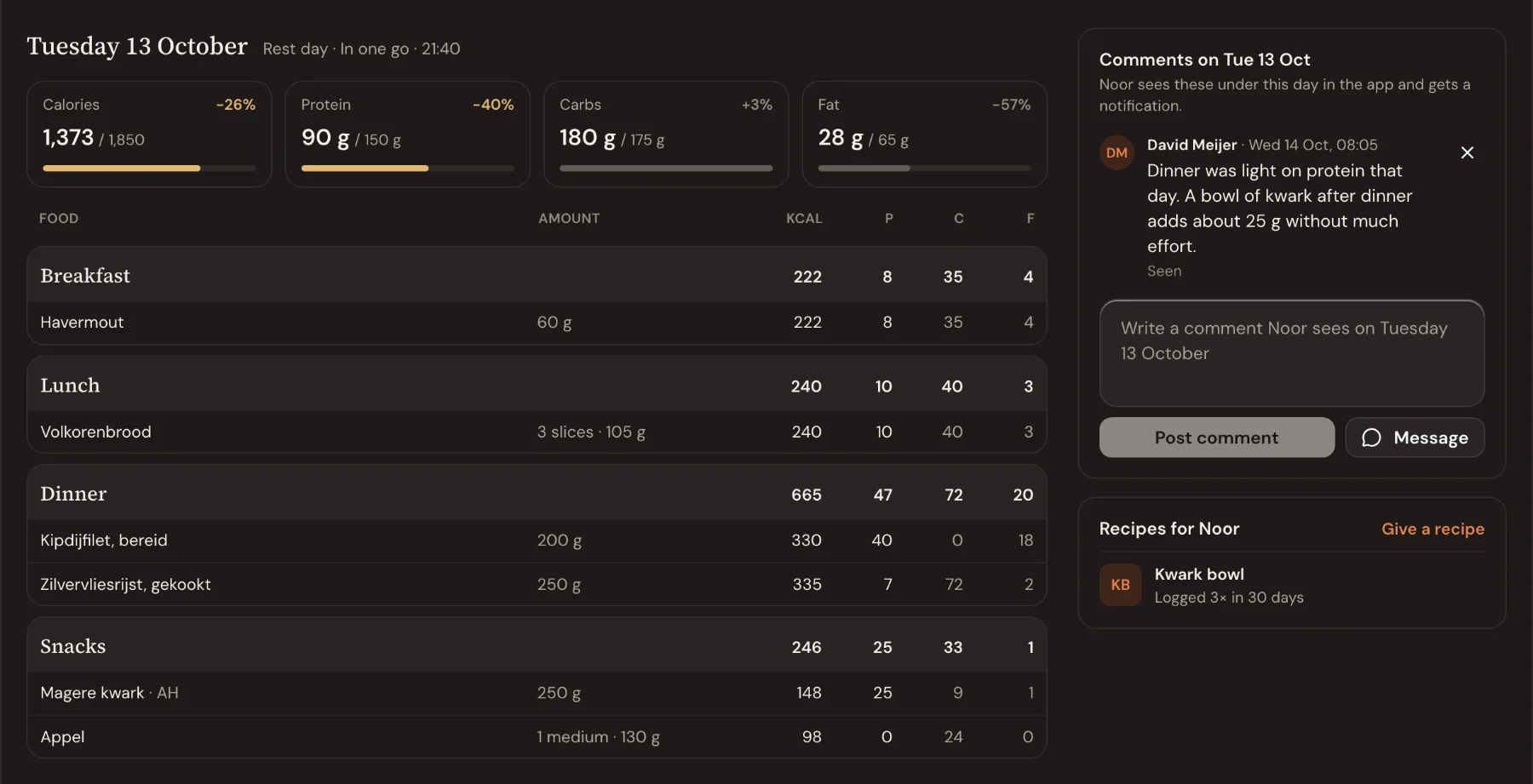
Clients log food in your studio's app: search, a barcode, a photo of the label, or one tap to log yesterday's breakfast again. On their Health tab you see Days logged for the week, and What stands out says which days were not logged or were logged in one go afterwards. Open a day to post a comment; the client gets a notification and finds it on that day.
Questions
How many days a week should a client log their food?
Five is a good target. It gives you enough to see patterns and leaves room for a weekend away.
Should clients log their food for ever?
No. Once targets are steady and the client knows their usual meals, logging a few days a month can be enough. Bring it back when progress stalls.
What if a client finds logging stressful?
Stop asking for numbers for a while and talk about one habit instead, such as protein at breakfast. Logging is a tool, not the goal.