How to run a progress review with a PT client
A 20-minute progress review for personal training clients every six weeks: what to prepare, which numbers to show and how to agree on the next phase.

Coach at Omnia Personal Training and co-founder of Trainnode · 4 min read
Progress you don't talk about is progress the client doesn't notice. A short review every six weeks turns a stack of training logs into a story: where they started, what changed, and what's next. It's also the best moment to catch a client who is quietly losing interest.
When to do it
At the end of each training phase, usually every four to eight weeks. Six weeks is a good default: long enough for real change, short enough to correct course.
Put it in the calendar when the phase starts, so it isn't something you'll do "when there's time". Use the first 20 minutes of a regular session. A separate meeting feels like an exam; part of a session feels like coaching.
Prepare in ten minutes
Before the session, look at the client's last six weeks:
- Three numbers that improved. A lift, sessions trained, a measurement or how they feel. Pick the ones the client cares about.
- One thing that didn't go well. A lift that stalled, missed weeks, poor sleep in the check-ins.
- Their goal from the intake or the last review. Read it in their words.
The four questions
1. What did you notice?
Ask before you show anything. Clients often mention things that aren't in the data: stairs feel easier, their back hurts less, they sleep better. Write these down; they matter more to the client than any number.
2. Here's what changed
Now show your three numbers, compared with the start of the phase. Keep it visual and short. One chart or a small table beats a page of data.
3. What got in the way?
Talk about the thing that didn't go well, without blame. "Your energy was low in weeks three and four, what was going on?" This is where you learn about the new job, the injury they didn't mention or the motivation that's dipping.
4. What do we focus on next?
Agree on one goal for the next phase. One, not five. Make it specific and measurable: "Squat 5 × 5 at 85 kg by the end of November", or "Train twice a week, every week, until Christmas".
When the review gets hard
Not every review is good news. Three situations come up often, and each needs a different tone.
The client is disappointed. They hoped for more, usually on the scale. Don't argue with the feeling. Acknowledge it, then show what did change, and ask what result would feel like progress to them. Often the goal itself needs adjusting, not the client.
The client trained much less than planned. Say it plainly and without judgement: "You trained 6 of the 12 sessions. What made it hard?" The answer tells you whether the plan, the schedule or the motivation needs to change. Plan the next phase around the sessions they can really do.
The client wants to stop. Sometimes the review is when it comes out. Listen first. A pause, fewer sessions or a different goal often keeps a client who was about to leave. If they still want to stop, end on good terms: they may come back, and they talk to friends.
Use the review for the next booking
A review is a natural moment to plan the coming weeks. Before the client leaves, book the sessions for the next phase and the date of the next review. Clients who leave a review with their next six weeks in the calendar are far less likely to drift.
After the review
- Write the goal down where the client sees it every week, not in your notebook.
- Plan the next phase around it. If the goal is a heavier squat, the program should show it.
- Mention it again in two weeks. "Halfway to 85 kg" keeps the goal alive.
In Trainnode
Everything for the review on one client page
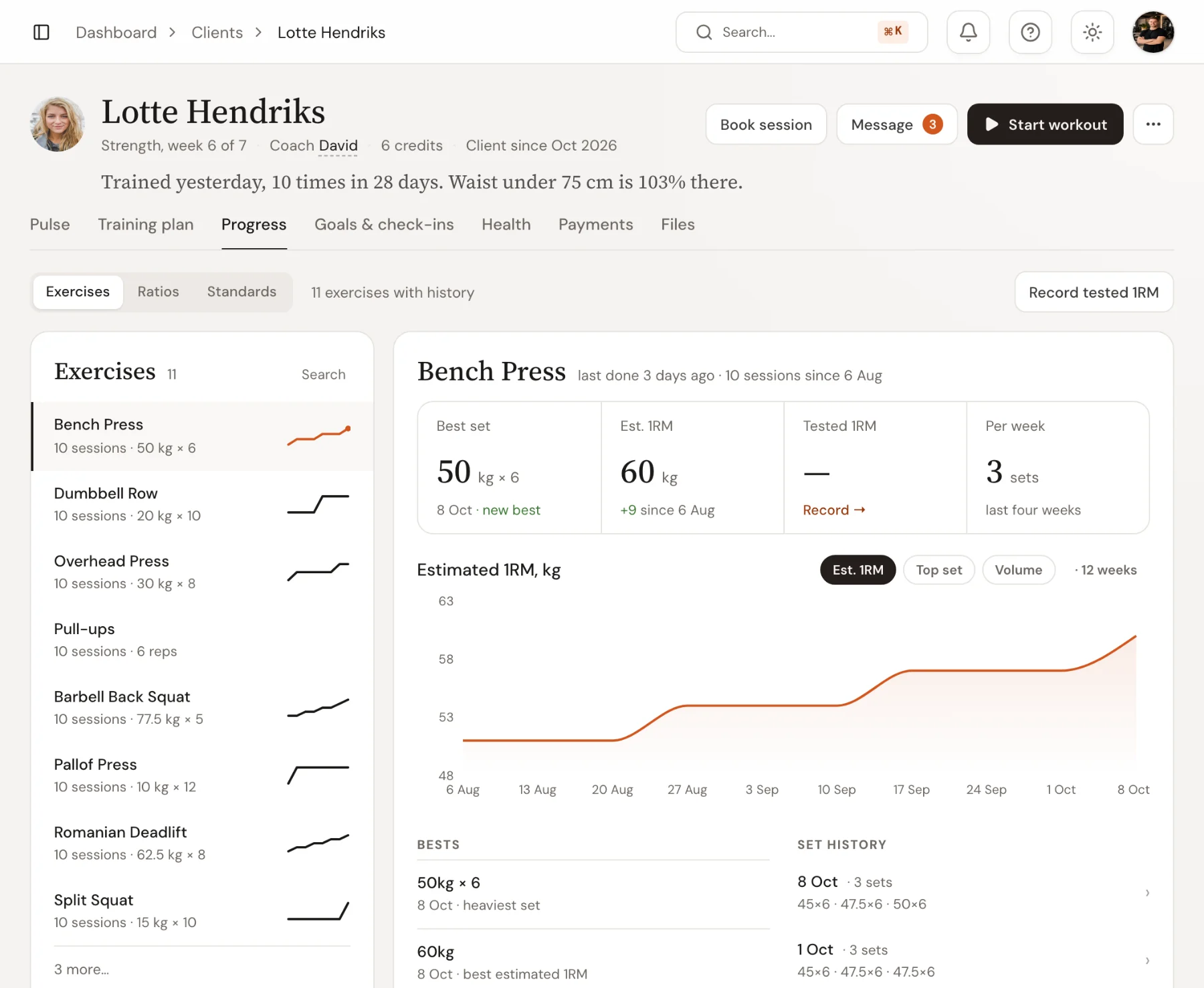
In Trainnode, the review takes ten minutes to prepare because the data is already there.
- The Progress tab shows each lift's estimated max, best sets and records over the phase.
- Goals & check-ins shows weekly answers, so you see when energy or sleep dropped.
- After the review, build the next phase in the plan builder and put the goal in the phase description, where the client reads it in the app.
Want a checklist to follow? Use the progress review agenda.
Questions
What if there's no progress to show?
There almost always is: sessions trained, technique, how they feel. If there really isn't, say so honestly and make the next phase about finding out why.
Should I take progress photos at the review?
If the client wants them. Photos every four weeks, same light and clothes, can show changes numbers miss. Never make them a condition.