No-show and late cancellation policy for PT studios
How long the free cancellation window should be, what to charge for a no-show, and how to word it so clients accept it. With a template.

Coach at Omnia Personal Training and co-founder of Trainnode · 5 min read
A cancellation policy is not about catching people out. It protects the one thing a PT studio cannot get back: an hour of a coach's time that nobody else can use. Most studios lose more to an unclear rule than to the cancellations themselves. Coaches make exceptions for clients they like, other clients notice, and the rule stops meaning anything.
This guide covers how long the window should be, what a late cancellation should cost, how the rule differs for packs and memberships, and how to word it. There is a ready-to-use template at the end.
What a late cancellation actually costs you
A one-to-one session is booked against one coach and one time. When a client cancels the evening before, that hour is almost always lost: the coach still shows up, and nobody else books a 7:00 slot at 21:00 the night before.
How long should the free window be?
24 hours is the standard for personal training, and the one clients expect. It gives you a working day to offer the slot to someone else, and it is easy to remember.
| Window | Works when | Watch out for |
|---|---|---|
| 12 hours | Coaches work split shifts and slots are easy to fill | Evening cancellations for morning sessions still slip through |
| 24 hours | Most PT studios | Nothing in particular, which is why it is the default |
| 48 hours | Coaches are fully booked weeks ahead | Feels strict to new clients; explain it at intake |
Pick one window for the whole studio. Different rules per coach are hard to explain and harder to enforce.
What should a late cancellation cost?
The simplest rule is also the fairest: a late cancellation counts as a session. How that plays out depends on how the client pays.
- Session packs and credits. The credit is used. There is no money to chase, which is why packs make cancellation policies painless.
- Memberships with a fixed number of sessions a month. The session counts towards that month's allowance.
- Pay per session. You keep the payment, or refund part of it. Some studios refund 50% for cancellations between 24 and 12 hours before.
Give it back when someone takes the slot
A fair middle ground many studios use: the late cancellation only counts if the hour stays empty. If a client from the waiting list takes the slot, the cancelling client gets the credit back. Clients see this as reasonable, and it rewards a late cancellation over a no-show.
What about no-shows?
Treat a no-show exactly like a late cancellation. Some studios add a small fee on top. Before you do, ask yourself whether you will really charge it. A fee you do not apply is worse than no fee at all.
When you cancel
The policy has to work both ways. When a coach or the studio cancels, the client gets everything back, whatever the timing. Say so in the policy. It is the sentence that makes clients trust the rest.
Three exceptions to agree on now
Decide these before they happen, so the coach on the floor doesn't have to:
- Illness with a doctor's note, or a family emergency. Most studios waive the first one each quarter, without discussion.
- Rescheduling instead of cancelling. Moving a session to another time in the same week is usually free.
- Bad weather or travel delays. Decide whether these count. If you hesitate, they don't.
Write the exceptions down. A waiver the client asked for and got is goodwill. A waiver the coach gives because they feel awkward is the start of an unenforceable rule.
How to word it so clients accept it
Short, specific, and in the client's language. Compare:
Cancellations within 24 hours of the scheduled appointment time will be subject to a fee equal to the full session rate.
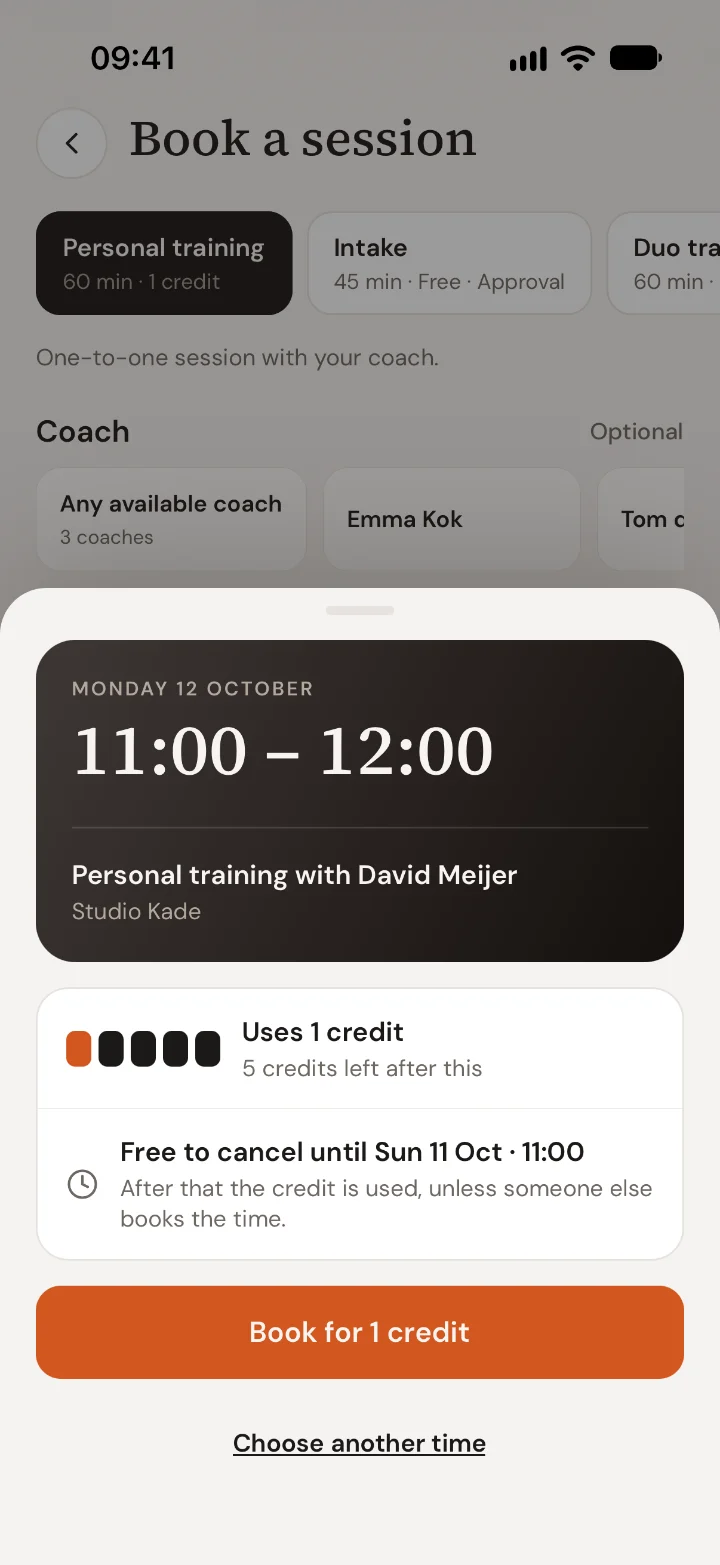
You can cancel for free up to 24 hours before your session. After that the session counts, unless someone else books the time.
The second version says the same thing in a way people read and remember. Show it in three places: in the intake paperwork, on the booking screen, and in the reminder the day before.
In Trainnode
Set the rule once and the app applies it
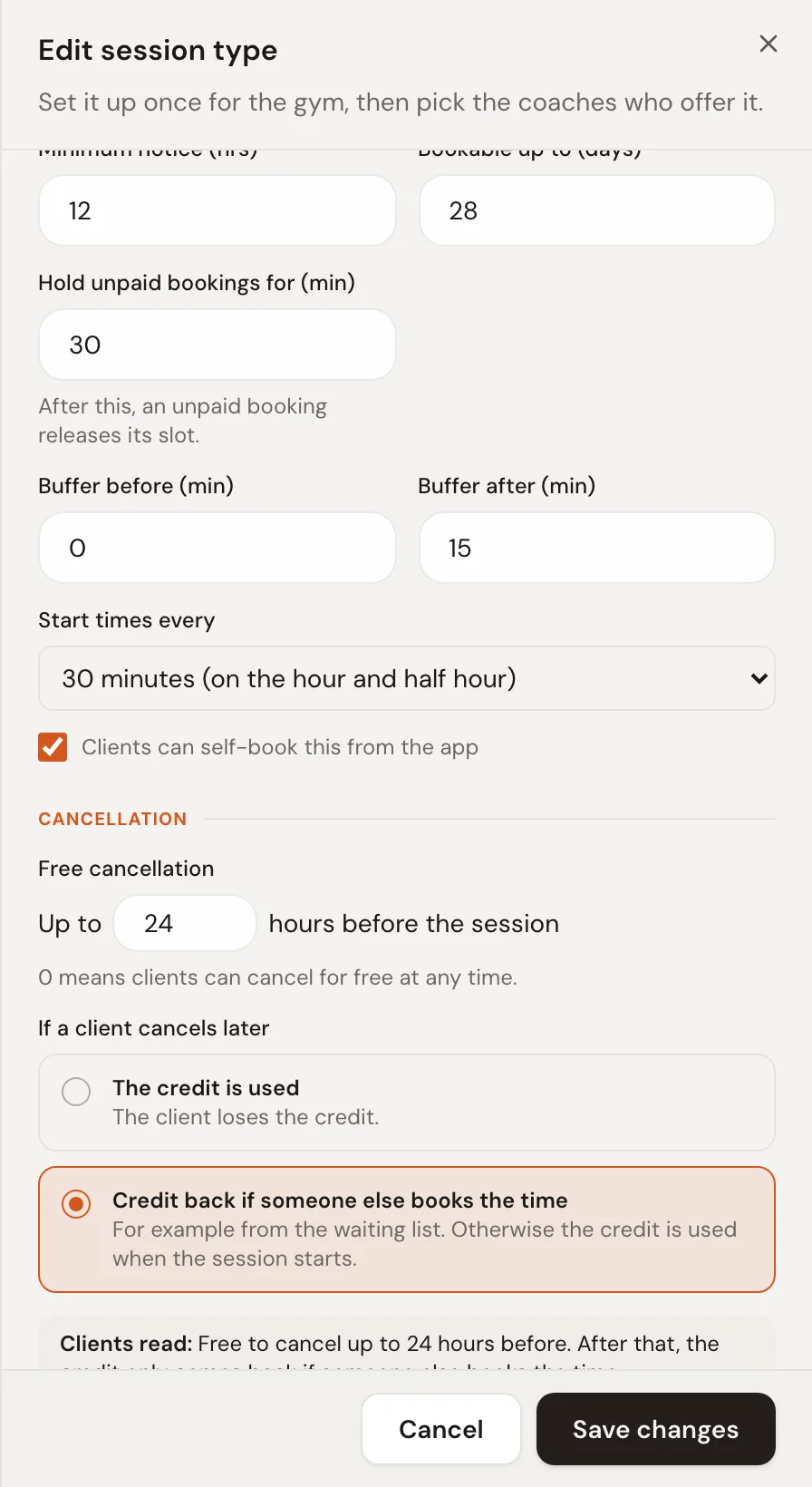
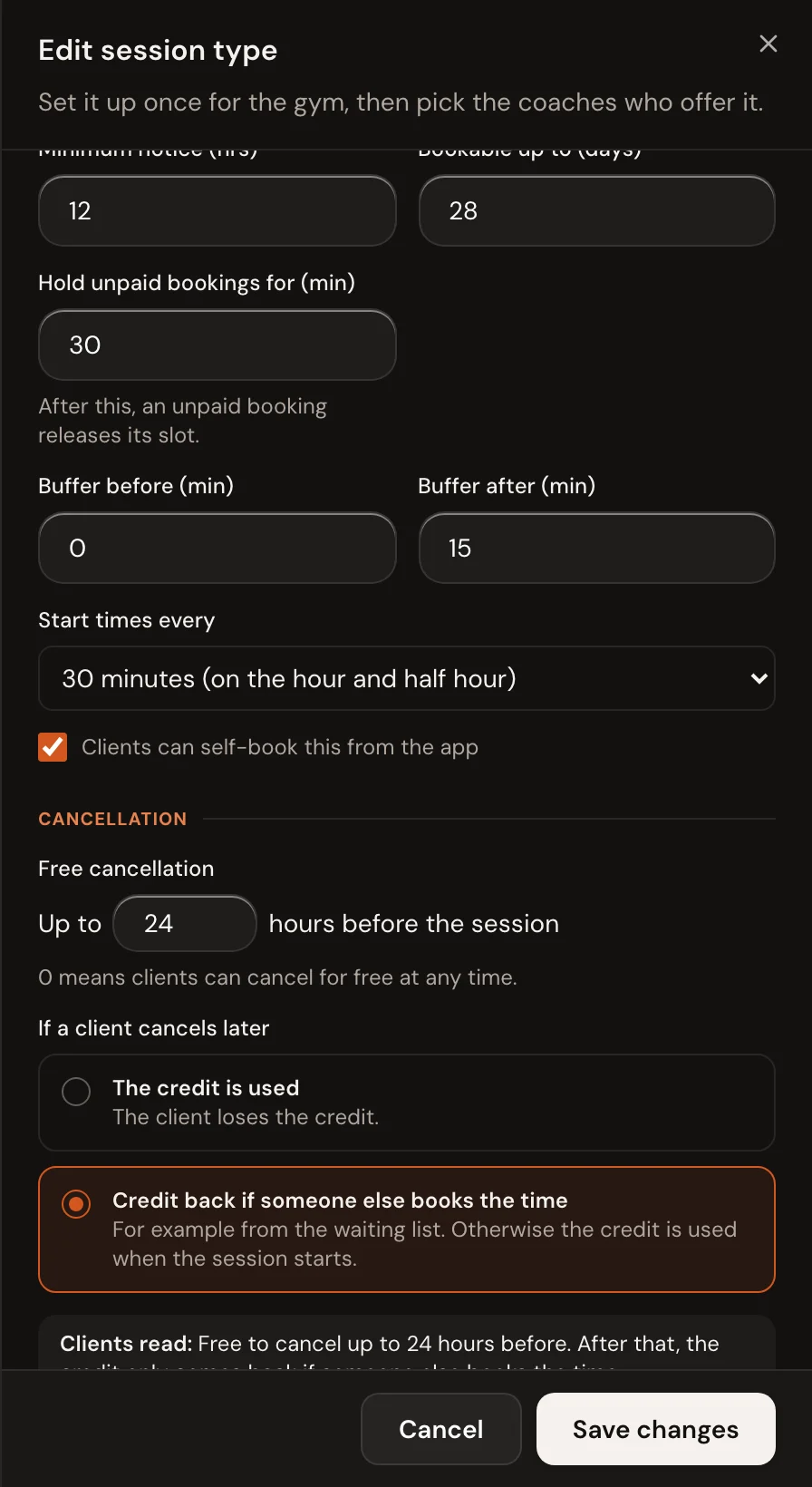
Every session type in Trainnode has its own cancellation rule.
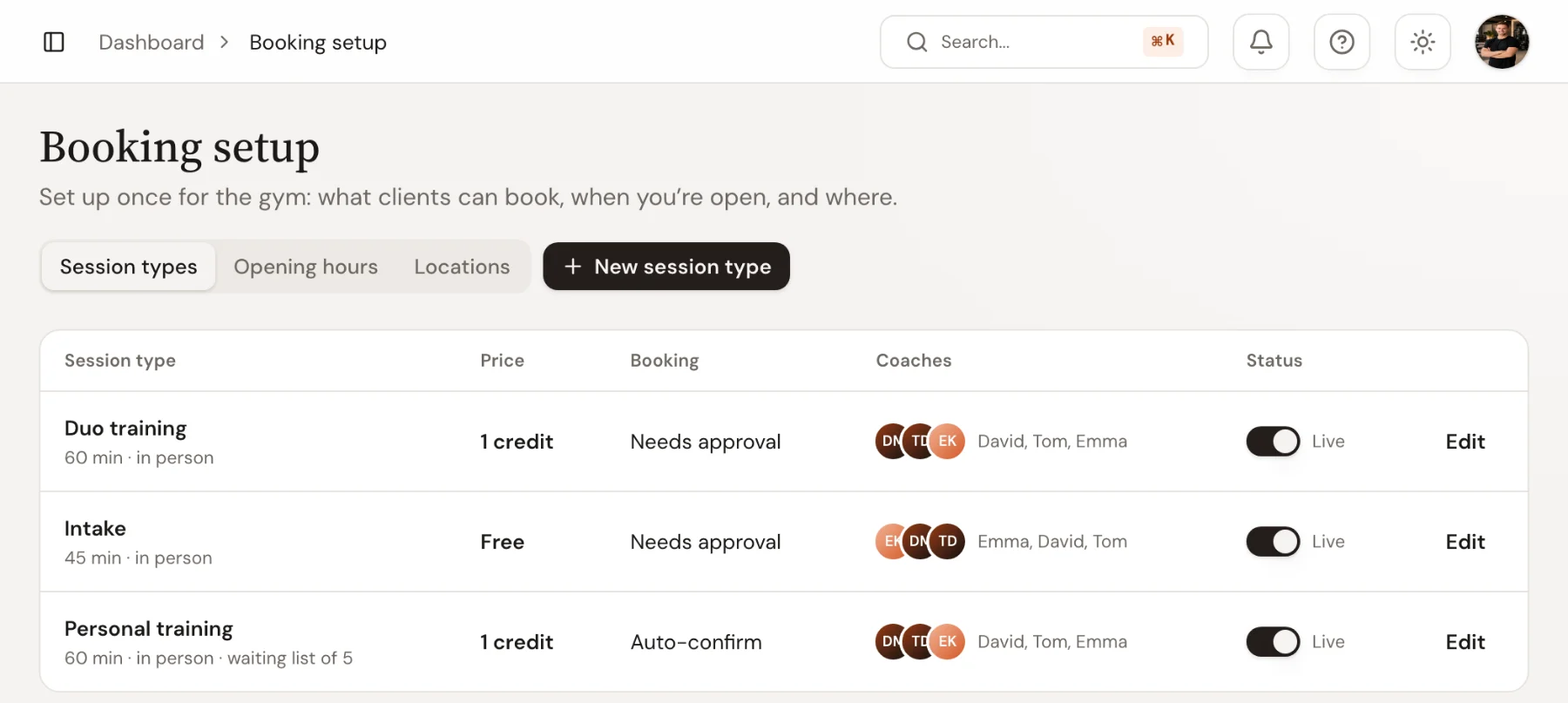
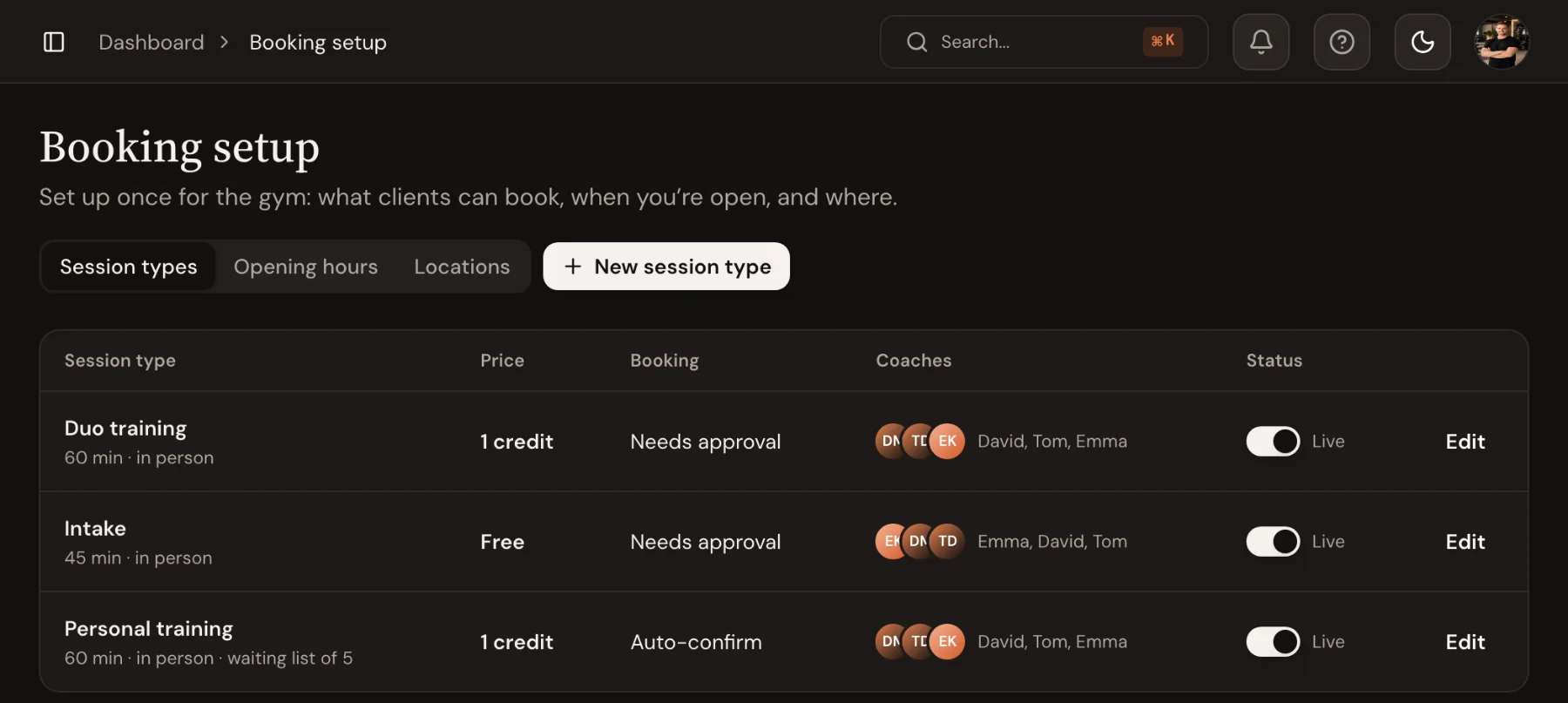
- Open Booking setup and edit the session type.
- Under Cancellation, set how many hours before the session clients can cancel for free.
- Choose what happens after that: the credit is used, or the credit comes back only if someone else books the time. Paid sessions can also refund a percentage.
The app shows clients the rule in plain words before they confirm, so nobody can say they didn't know. When a coach or the studio cancels, the client always gets the session back.
Your dashboard
Your client’s app
Questions
Is a 24-hour cancellation policy legal in the Netherlands and the EU?
In general, yes. A cancellation term is part of the agreement, as long as the client knows about it before they buy and the charge is reasonable. Put it in your terms and show it when people book. This is not legal advice; check with an adviser if your terms are unusual.
Should coaches be allowed to waive the rule?
Agree on the exceptions together and let coaches apply only those. Ad-hoc waivers are where policies fall apart.
What if a client keeps cancelling late?
Talk to them. Repeated late cancellations usually mean the time slot no longer works for them. Moving them to a better time keeps the client.
Do I need a different rule for intakes or trial sessions?
A free intake has nothing to charge. Many studios let people cancel an intake at any time and keep the strict rule for paid sessions.